
Learning how to knit yarn over raglan increases is a simple way to add shaping and pretty detail to a top down sweater while using one of the most common increase methods in knitting. If you are working through my collection of free knitting tutorials, this guide will help you understand how yarn overs create raglan lines, how to keep them even, and how to fix a missed yarn over before it throws off the rest of your sweater.
Yarn over raglan increases are often used in top down sweater patterns because they add stitches while creating a visible line along the raglan seam. Instead of hiding the increase, the yarn over becomes part of the design. This tutorial will walk you through what a yarn over raglan increase does, where to place it, how to work it consistently on each side of the raglan marker, and what to do if you realize one is missing.
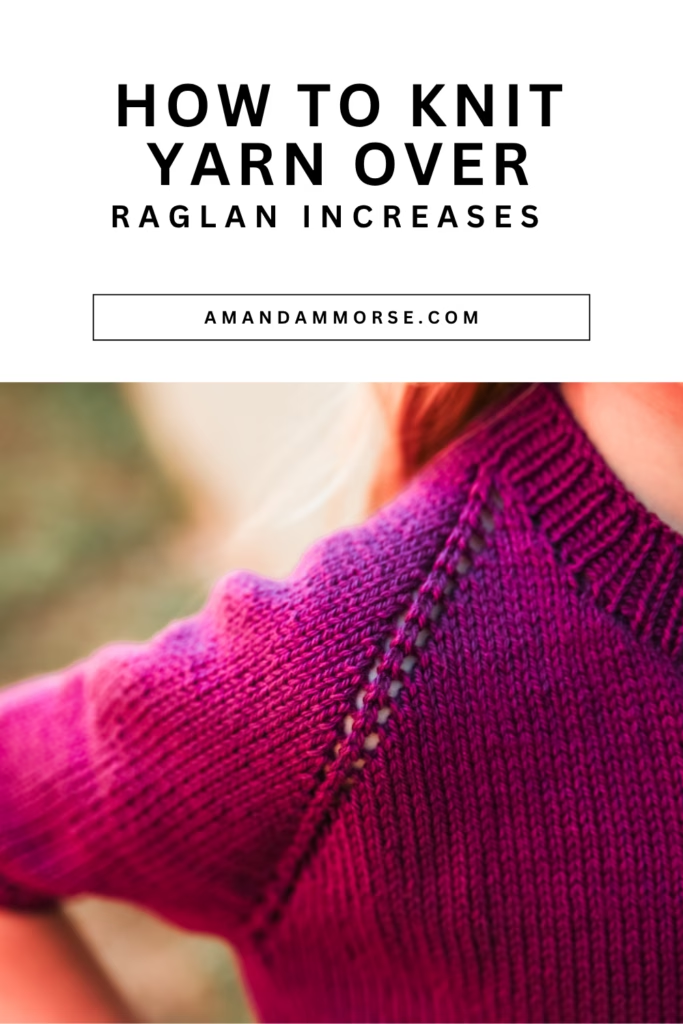
Yarn overs can feel confusing the first time you see them used as increases, especially if you are used to make one increases or lifted increases. With raglan shaping, the goal is not just to add stitches, but to add them in the same place on every increase round so the sleeve and body sections grow evenly.
Once you understand where the yarn overs sit in relation to your raglan markers, the repeat becomes much easier to follow. A little bit of checking as you go can save you from uneven stitch counts later.
What Are Yarn Over Raglan Increases?
Yarn over raglan increases are increases worked near the raglan lines of a top down sweater, usually before and after a marker. A yarn over adds one new stitch by bringing the yarn over the needle, and when it is worked on the next round, it creates a small eyelet.
In a raglan sweater, those eyelets can form a decorative line from the neckline down toward the underarm. This is especially pretty on lightweight sweaters, tees, and children’s tops because the increase line becomes part of the finished design.
You will usually see yarn over raglan increases written in a pattern as something like this:
Knit to marker, yarn over, slip marker, knit the raglan stitch or stitches, slip marker, yarn over.
Some patterns place the yarn overs directly beside the marker, while others use one or more raglan stitches between the increases. Always follow the pattern instructions, because the placement affects both the look of the raglan line and the final stitch count.

The most important thing is to work the increases the same way every time. If your pattern uses one yarn over on each side of the raglan line, make sure you are adding both yarn overs on every increase round.
It can help to think of each raglan section as a small checkpoint. Before moving on, make sure you worked the increase before the marker and the increase after the marker.
How Do You Knit Yarn Over Raglan Increases Evenly?
To knit yarn over raglan increases evenly, pay close attention to your markers and repeat the same movement at each raglan point. Most top down raglan sweaters have four raglan lines, which means you may be adding eight stitches on each increase round.
A basic yarn over raglan increase round may look like this:
Knit to the raglan marker, bring the yarn to the front between the needles, take it over the right needle to create the yarn over, slip the marker, work the raglan stitch or stitches, slip the next marker, make another yarn over, and continue knitting.
If you are knitting in the round, the yarn over will usually be worked as a regular knit stitch on the next round unless your pattern says otherwise. This leaves an open eyelet along the raglan line.
Try not to pull the yarn over too tightly. If the yarn over is snug, the eyelet may look smaller than the others and the raglan line can feel uneven. If it is too loose, the hole may look larger than the rest.
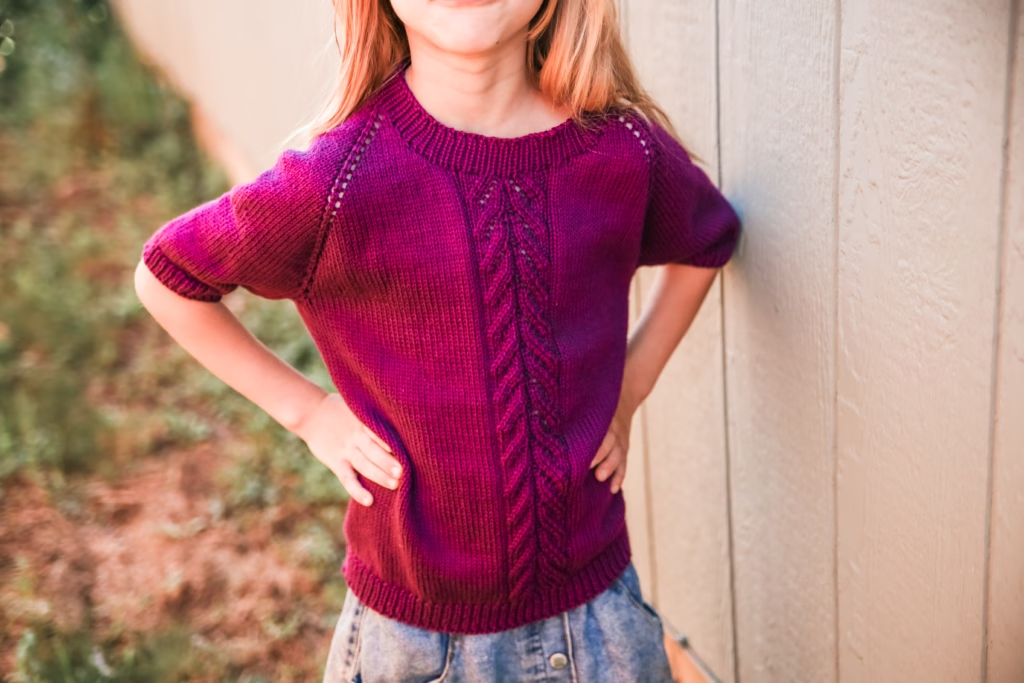
A helpful habit is to count your stitches between markers after every few increase rounds. You do not have to count the whole sweater every time, but checking the sleeve sections and body sections can help you catch a missed yarn over early.
If your raglan line starts to look uneven, stop and compare it to the other raglan lines. A missing eyelet, a twisted yarn over, or an extra accidental yarn over can usually be spotted more easily when you look at all four raglan lines together.
What Should You Do If You Miss a Yarn Over Raglan Increase?
If you miss a yarn over raglan increase, the best fix depends on when you notice it. If you catch it right away on the same round, you can usually go back a few stitches, add the yarn over in the correct spot, and continue knitting.
If you notice the missed yarn over on the next round, you may be able to lift the strand between the stitches where the yarn over should have been and work it as the missing increase. This can correct the stitch count, although it may not look exactly like the other yarn over eyelets.
For a more accurate repair, you can carefully tink back to the spot where the yarn over was missed, add it, and then rework the stitches. This takes a little more time, but it keeps the raglan line looking consistent.
If the missed yarn over is several rounds back, look at how visible the mistake is. If the raglan line still looks nice and the stitch count can be corrected without affecting fit, you may decide to add the missing stitch nearby. If it changes the sleeve or body stitch count in a noticeable way, it is usually worth going back and fixing it properly.

Yarn over raglan increases are easy to miss because the actual increase is just the movement of the yarn around the needle. Using markers, counting regularly, and pausing at each raglan line can help keep the shaping steady.
The sooner you catch a missing yarn over, the easier it is to fix. That is why checking your stitch counts after increase rounds is one of the best habits to build when knitting top down raglan sweaters.
What Patterns Can You Use to Practice Yarn Over Raglan Increases?
If you want to practice yarn over raglan increases in a real project, top down sweater patterns are a great place to start. These patterns let you see how each increase round shapes the yoke and how the raglan lines grow from the neckline to the underarm.
• Youth Lydia Tee
• Youth Fern Pullover
Yarn over raglan increases are one of those techniques that become much easier once you see them in action. After a few increase rounds, the pattern starts to feel more predictable and the raglan lines become easier to read.
If you are newer to sweater knitting, take your time with the first few rounds. Once the markers are set and the increase rhythm is clear, the rest of the yoke usually feels much more manageable.
Have you used yarn over raglan increases in a sweater before, or are you getting ready to try them for the first time? Leave a comment and let me know what pattern you are working on.
This post may contain affiliate links. If you make a purchase through one of these links, I may earn a small commission at no extra cost to you.
The post How to Knit Yarn Over Raglan Increases appeared first on The Knit in the Womb Blog.


