
Learning how to knit lace for beginners is a lot less scary when you understand the simple stitches that create those pretty open spaces in your knitting.
If you have ever looked at a lace knitting pattern and immediately felt like you needed to close the tab and go make a plain dishcloth instead, this tutorial is for you. Lace knitting looks fancy, but the basic idea is actually very simple. You are using yarn overs to make little open spaces, and decreases to keep your stitch count under control while shaping the fabric. In this post, I am going to walk through how to knit lace for beginners in a calm, simple way so you can understand what is happening before you jump into a bigger lace project.
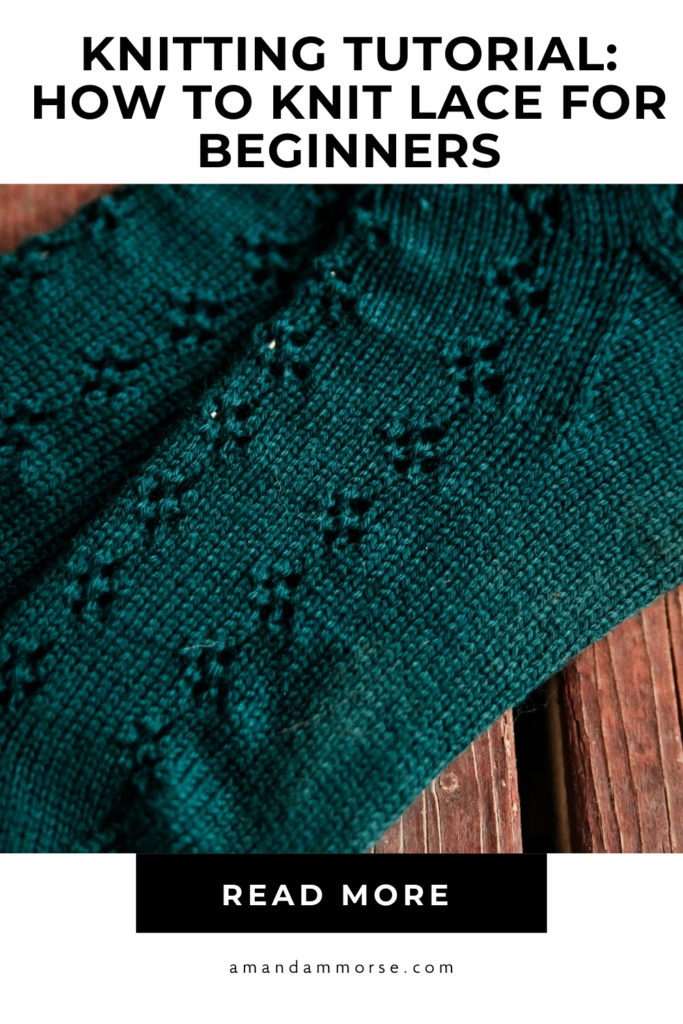
Lace knitting does not have to start with a huge shawl, sweater, or complicated chart.
A small project is usually the best place to begin because you can practice the same stitches over and over without feeling like the whole project depends on one perfect row.
Once you understand yarn overs and decreases, lace starts to feel much more manageable.
And honestly, it is pretty exciting when you realize those little holes are not mistakes. They are the whole point.
What Materials Do You Need to Learn How to Knit Lace for Beginners?
When you are learning how to knit lace for beginners, I recommend starting with a smooth, light-colored yarn like Knitpicks Swish and needles that match the yarn label or the pattern you are using.
A smooth yarn makes it easier to see your stitches, which matters a lot when you are learning yarn overs and decreases. Dark, fuzzy, or highly textured yarn can make lace harder to read because the stitches blend together. For a first lace project, cotton or a smooth wool blend can work really well, especially if you are practicing on something small like a dishcloth, scarf, or simple swatch.
You do not need a huge list of supplies to begin lace knitting.
You mainly need yarn, needles, a pair of scissors, a yarn needle for weaving in ends, and possibly stitch markers if your lace pattern has repeats.

Stitch markers can be especially helpful for beginner lace knitting because they help separate each repeat.
That way, if your stitch count gets off, you can usually find the problem in one small section instead of searching across the entire row.
The goal is not to make the process complicated.
The goal is to give yourself enough support that you can learn what the stitches are doing and actually enjoy the project.
How Does Lace Knitting Work?
Lace knitting works by combining yarn overs and decreases in a planned pattern.
A yarn over creates an extra loop on your needle, which becomes the open space in the fabric. Since yarn overs add stitches, most lace patterns also include decreases like knit two together or slip, slip, knit. These decreases bring the stitch count back down while also leaning the stitches in different directions. That is what gives lace knitting its shape, movement, and pretty little design.
When you are learning how to knit lace for beginners, it helps to think of yarn overs and decreases as partners.
The yarn over opens the fabric, and the decrease keeps everything balanced.
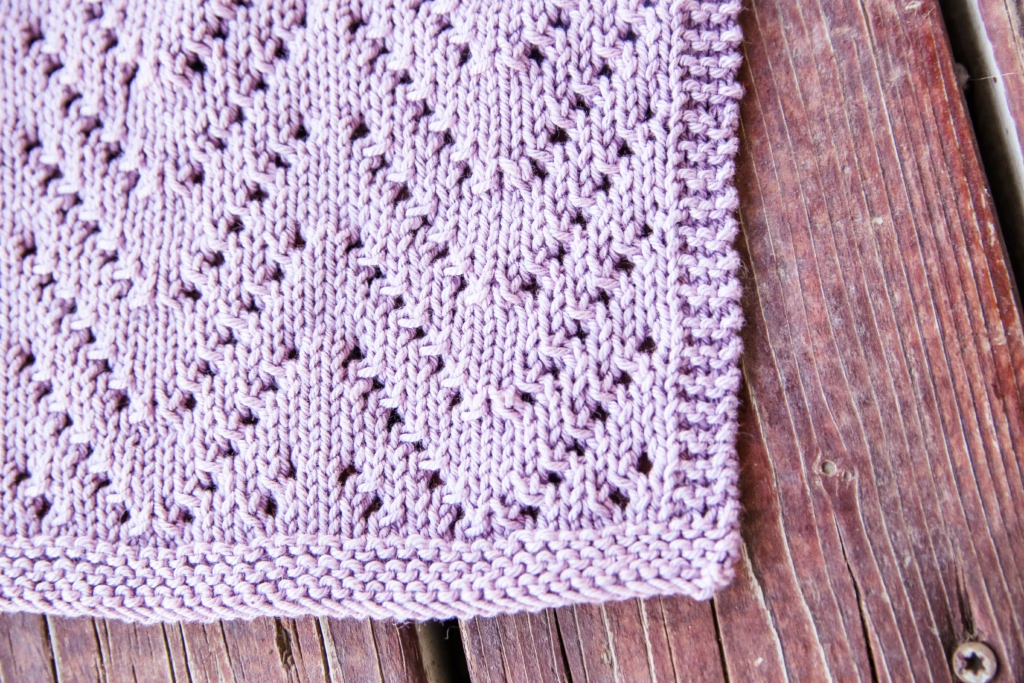
One of the most common beginner mistakes in lace knitting is forgetting a yarn over or accidentally adding one where it does not belong.
That is why it helps to count your stitches often, especially while you are learning.
You do not have to wait until the end of the whole project to check your work.
Counting after each lace row or after each repeat can save you from having to rip back several rows later. You can even place stitch markers after each pattern repeat so you can easily see count repeats.
How Do You Knit a Yarn Over?
A yarn over is made by bringing the yarn around the needle so it creates a new loop.
If you are knitting the next stitch, the yarn usually comes to the front between the needles and then goes over the right needle before you knit the next stitch. That extra loop is your yarn over. On the next row, you will knit or purl into that loop just like it is a regular stitch, and that is what creates the open space.
For beginner lace knitting, it is helpful to practice yarn overs slowly at first.
They can feel a little strange because you are not working into an existing stitch when you make them.
Instead, you are creating a new stitch on purpose.
Once you have done a few rows, you will start to recognize what a yarn over looks like on your needle.
That makes it much easier to catch mistakes before they turn into a bigger problem.
What Decreases Are Used in Beginner Lace Knitting?
The most common decreases used in beginner lace knitting are knit two together and slip, slip, knit.
Knit two together, often written as k2tog, is a right-leaning decrease. You simply knit two stitches together as if they were one stitch. Slip, slip, knit, often written as ssk, is a left-leaning decrease. For that one, you slip two stitches one at a time, then knit them together through the back loops.
These decreases may sound technical at first, but they are very doable with a little practice.
When you are learning how to knit lace for beginners, you do not need to memorize every decrease in the knitting world.
Start with the common ones: k2tog and ssk
Learn what they look like.
Pay attention to which way they lean.
That little bit of understanding will help lace patterns make so much more sense.
What Is the Best First Lace Knitting Project?
The best first lace knitting project is usually something small, simple, and easy to finish.
A dishcloth is a great choice because it gives you enough space to practice a lace repeat without committing to a large project. A scarf can also be a good beginner lace project if the repeat is simple and easy to memorize. I would save bigger projects like lace shawls, lace sweaters, or all-over lace garments until you feel comfortable reading your stitches and fixing small mistakes.
Small projects are perfect because they let you build confidence without making the whole thing feel overwhelming.
You get to practice yarn overs, decreases, stitch counting, and reading your knitting in a project that is still useful when you are done.
That is a big win.
How Can Beginners Avoid Mistakes in Lace Knitting?
Beginners can avoid a lot of lace knitting mistakes by counting stitches often, using stitch markers, and learning to read the stitches on the needle.
If your pattern has repeats, place a stitch marker between each repeat. Then count each section as you go. If one repeat has too many stitches or too few stitches, you know exactly where to look. It is also helpful to check your yarn overs before moving on to the next row because missed yarn overs are one of the easiest lace mistakes to make.
Another good tip is to use a lifeline when you are working on a bigger lace project.
A lifeline is a piece of smooth scrap yarn threaded through a completed row of stitches.
If you make a mistake later, you can rip back to that safe row without losing the whole project.
For a small beginner project, you may not need one, but it is a helpful tool to know about as you grow in lace knitting.
What Beginner Lace Knitting Patterns Should You Try Next?
If you are learning how to knit lace for beginners, small lace projects are a great place to start before moving into larger pieces.
Here are a few related posts and patterns to check out next:
• Sarah Dishcloth
• Deborah Tee
• Sarah Tee
• Simone socks
• Wheat Cowl
These kinds of patterns let you practice lace knitting in different ways.
Some are small and quick, while others let you use lace in wearable projects once you feel more confident.

The more you practice lace knitting, the easier it gets to understand what each stitch is doing.
Instead of just following the pattern row by row, you will start to recognize the rhythm of the yarn overs and decreases.
That is when lace knitting starts to feel much less intimidating.

Have you tried lace knitting yet, or does it still feel a little scary? Leave a comment and tell me what kind of lace project you want to try first.
This post may contain affiliate links. That means I may earn a small commission if you make a purchase through my links, at no extra cost to you.
The post Knitting Tutorial: How to Knit Lace for Beginners appeared first on The Knit in the Womb Blog.


